
The Texas Public Information Act
The Texas Public Information Act, in Government Code Chapter 552, gives the public a right to records held by governmental bodies. The policy section states that Texas favors complete information about government affairs unless the law provides otherwise, and the core access section requires public information to be available during normal business hours. Texas Government Code Chapter 552 sets out both the right of access and the exceptions.
Court records are a key exception to the general process. Section 552.0035 directs that access to judiciary records follows rules adopted by the courts rather than the open-records process. The Texas State Law Library court records guide explains that not every court record is online and some must be requested from the clerk that holds it.

So the first question is always which office holds the record, because that decides whether the PIA or court rules apply.
What Records the County Clerk Maintains
The County Clerk holds a wide range of Galveston County public records beyond the courts. The County Clerk's records search separates each type onto its own path, so a deed search and a court search do not run through the same tool. The District Clerk, by contrast, keeps the district court case files.
- Real property records such as deeds, liens, and plats.
- Marriage records and certified marriage copies.
- Assumed name and DBA records for businesses.
- County Court at Law and Probate Court records.
- Commissioners court records and other county filings.
Because these sit on separate systems, start with the record type you need rather than one generic search box. The District Clerk holds the district court case files, including civil, family, felony, and juvenile matters served by that office, while the Sheriff keeps incident and offense reports. So a single Galveston County records question can point to three different offices depending on what you actually need.
This split is a feature, not a flaw. By routing real property, marriage, court, and administrative records to the offices that maintain them, Galveston County keeps each index clean. The trade-off is that a requester has to know which office to ask, which is why the County Clerk's records search page and the Sheriff's records page both spell out what they cover. When you are unsure, a quick call to the county's main line can confirm the right office before you put a request in writing.
How to File a Public Records Request in Galveston County
A public-information request goes to the office that holds the record. The Sheriff's Administrative Services division takes records and public-information requests in writing, by email, mail, or hand delivery to the Records Division. Court-copy requests, by contrast, use the clerk's own copy form. The steps below cover a standard request.
- Identify the office that holds the record, such as the Sheriff, County Clerk, or District Clerk.
- Describe the records you want as clearly as possible, with names and dates.
- Submit the request in writing through the office's accepted channel.
- Wait for the response and any cost estimate from the agency.
- Pay the fees and receive the records, or a written reason for any withholding.
The Sheriff's records and public-information page lays out its process. The Sheriff's Administrative Services page explains how to submit a Galveston County records request in writing.

Sending a court-copy request to the Sheriff, or a report request to the clerk, only slows things down, so match the request to the holder.
Court Copy Request vs Public Information Request
This is the distinction that trips up most Galveston County requesters. A court-copy request asks a clerk for a document from a case file. A public-information request asks a government office for an administrative record. They use different forms, different offices, and sometimes different rules, so the two are not interchangeable.
| Court Copy Request | Public Information Request | |
|---|---|---|
| Goes To | District Clerk or County Clerk | Sheriff, county office, or other governmental body |
| For | Case documents, certified copies | Reports, administrative and government records |
| Form | The clerk's copy request form | A written PIA request |
| Rules | Court rules and clerk procedures | Government Code Chapter 552 |
When in doubt about a Galveston County record, ask the office whether it wants a clerk copy request or a public-information request before you send anything.
Public Records Request Form Fields
A written request does not need a special form, but it should include enough detail for the office to find the records. A clear request reduces back-and-forth and helps the agency estimate cost. The table lists the information a request should include.
| Field | Required | Notes |
|---|---|---|
| Requester Name and Contact | Yes | So the office can respond and send a cost estimate |
| Description of Records | Yes | Be specific; names, case numbers, and document types help |
| Date Range | No | Narrows a broad request and lowers cost |
| Format Preference | No | Paper, certified copy, or electronic where available |
| Delivery Method | No | Pickup or mail; mailed copies may need return postage |
For court copies, the District Clerk's own request form also asks for the case number, the case style, the document name, the copy type, and the payment method.
Response Timelines
Texas sets a promptness standard rather than a single fixed deadline for every request. A governmental body must produce public information promptly, and if it believes a record is excepted, it generally must ask the Texas Attorney General for a ruling within a set time. That review can add weeks, especially when a request touches sensitive or law-enforcement material.
If an agency needs to redact protected details, it may release the rest and withhold the protected parts. A request that is broad or unclear can also take longer, so a focused request with a date range usually gets a faster answer. Galveston County offices handle a steady volume of requests, so a clear, specific ask tends to move through the queue more quickly than a sweeping one.
Public Records Fees in Galveston County
Fees depend on the office and the record. Clerk copies follow the posted clerk schedule, while public-information copy charges follow state cost rules. The documented clerk rates below cover most copy and certified-copy needs.
| Item | Amount |
|---|---|
| Paper copy per page | $1.00 |
| Certified copy | $5.00 + $1.00 per page |
| Records search fee | $5.00 |
| Criminal history check | $10.00 |
| Law Library printing | $0.10 per copy |
Note: for large or labor-heavy requests, an agency may provide a written cost estimate before it starts the work.
Records That Are Exempt
Not every record is open. The Public Information Act and other statutes protect several categories. The law-enforcement exception in Section 552.108 can hold back active investigation and prosecution files. Section 552.130 protects driver and motor-vehicle information, and Section 552.147 lets agencies redact Social Security numbers. Juvenile, adoption, sealed, expunged, and mental-health records are confidential under their own laws.
Criminal history is a special case handled by the state. The Texas Department of Public Safety keeps statewide criminal history through its Crime Records division, with its own dissemination rules. The Texas DPS Crime Records division controls criminal-history release that a local docket alone does not.
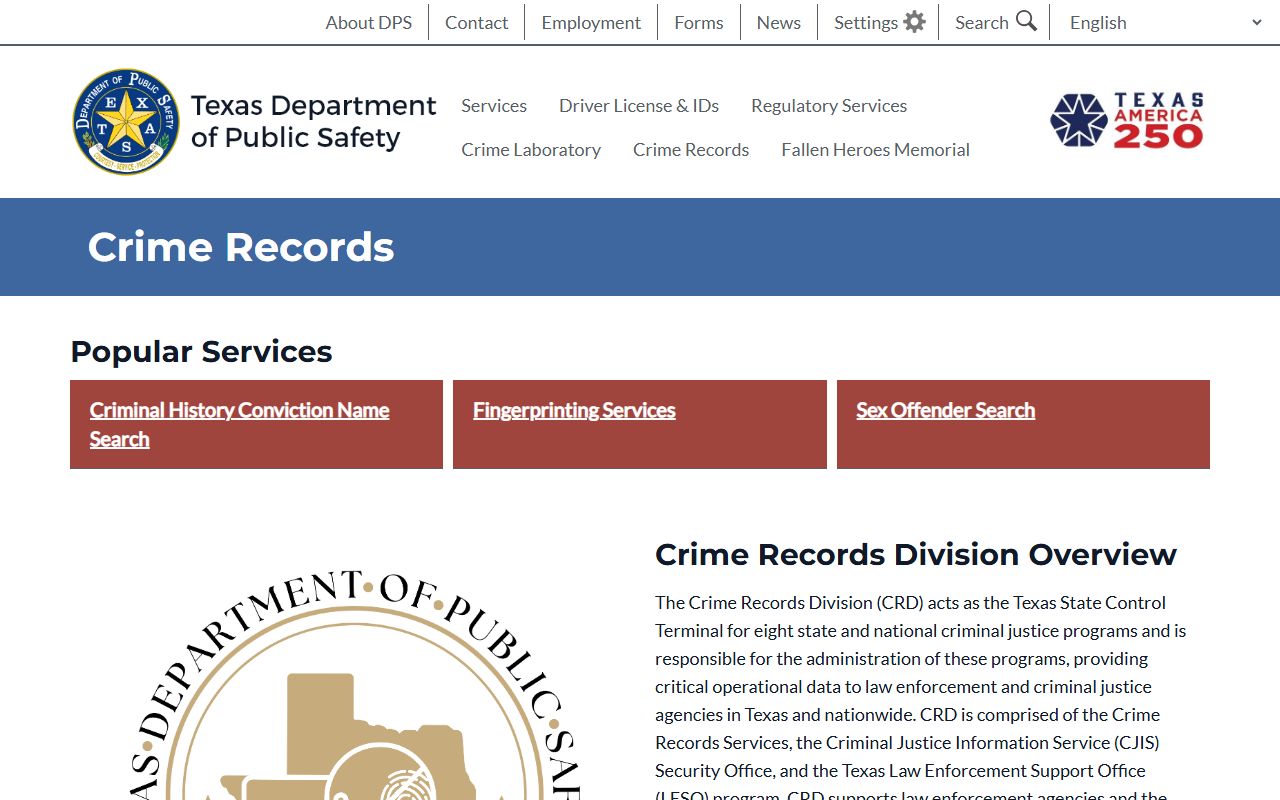
So a Galveston County case can be searchable by number while the underlying criminal-history report stays restricted under state dissemination rules.
If Your Request Is Denied
A denial is not always the end. For ordinary county and sheriff records, if a governmental body wants to withhold information, it commonly must seek a ruling from the Texas Attorney General, and that ruling decides whether the record stays closed. For court records, the answer may come from court rules, a sealing order, or a statute instead of a PIA ruling.
If you disagree with how a request was handled, you can ask the office to explain its basis and point to the statute it relied on. For criminal-history limits, nondisclosure and expunction laws can keep a record closed even when a docket still shows a case number, so the path forward depends on the record type.
Patience and precision help. A Galveston County office that must seek an Attorney General ruling is following the law, not stalling, and a narrower request often avoids that step entirely. If a record truly is public, citing the right office and a clear description usually gets it released without a fight.